
The Cart Abandonment Email Sequence We Stopped Sending (And What Replaced It)
Three-email cart abandonment sequences are a 2018 playbook running on autopilot in 2026. Here's the signal-based recovery system we've moved clients to, and the numbers that justify the rebuild.
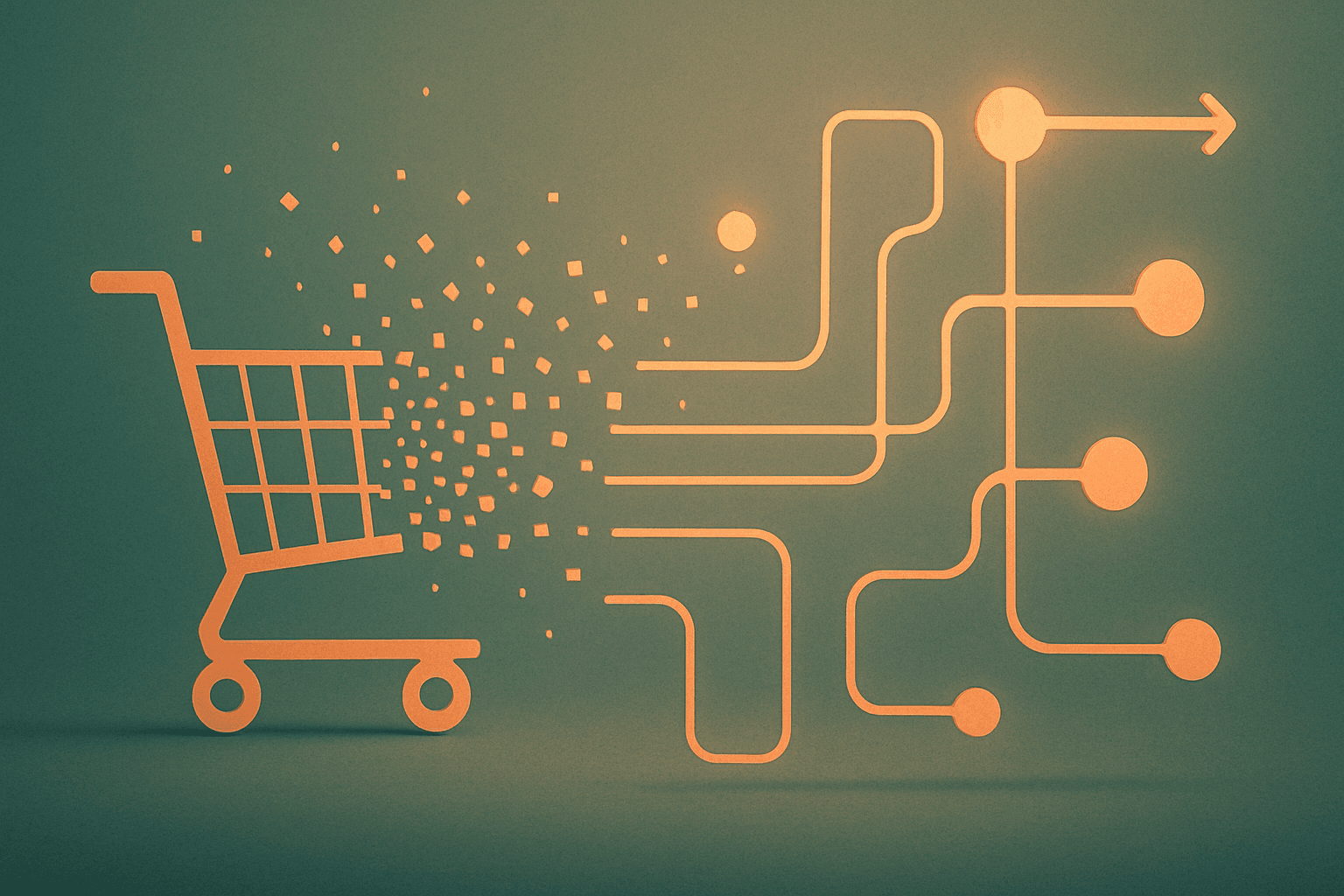
We audited 23 Shopify stores last quarter and found the same flow running on 21 of them: abandoned cart email at 1 hour, reminder at 24 hours, discount at 72 hours. Same copy templates, same subject lines, same 8–12% recovery rate that hasn't moved since 2020. We've stopped recommending it.
What replaced it isn't a smarter sequence. It's a different mental model — one where the trigger isn't "cart sat idle" but "we know why this person left". Below is what we've been shipping instead, why it works, and the engineering pieces you'll need.
Why the classic three-email flow stopped pulling its weight
The abandoned cart email was designed for a web where shoppers used one device, one tab, and decided in one session. That world is gone. By the time your 1-hour email lands, the shopper has already comparison-shopped on three other tabs, watched a TikTok review, asked a friend on WhatsApp, and either decided against the purchase or bought from someone else.
In our experience across DTC and mid-market accounts, the three biggest problems are:
- Attribution inflation. A meaningful chunk of "recovered" revenue is shoppers who would've returned anyway. When we ran holdout tests (10% of abandoners get no email), incremental lift was often half of what the platform reported.
- Discount training. Customers learn the pattern. They abandon on purpose to wait for the 10% code. We've seen repeat customers whose entire purchase history is discounted carts.
- Inbox fatigue. Apple Mail Privacy Protection broke open-rate signals, Gmail's tabs hide promotional mail, and shoppers receive 4–8 abandonment emails per week from various stores. Yours blends in.
The sequence still produces revenue. That's not the question. The question is whether that revenue is incremental and whether the same effort spent elsewhere would yield more.
The signal-based model
Instead of one trigger (cart abandoned), we segment abandoners by why they likely left and route each to a different recovery surface. The signals come from behavior already captured on the storefront — no new tracking required for most Shopify setups.
The four signals we actually use
- Price hesitation — shopper viewed the cart, scrolled to the totals, then left. Often correlates with multiple visits to shipping/returns pages.
- Trust hesitation — first-time visitor, short session, no review interaction, abandoned at the email field on checkout.
- Logistics block — abandoned after entering a postcode or selecting a shipping option. Usually a delivery date or cost issue.
- Distraction — added to cart, browsed more products, didn't return. The shopper is interested but wasn't ready.
Each gets a different recovery surface, channel, and timing. None of them get the same generic "You left something behind!" email.
How the recovery surfaces map
Here's the routing logic we've been shipping. The exact thresholds vary by store but the structure holds.
// Simplified routing — runs server-side on cart update events
function routeAbandoner(session) {
  const { events, customer, cart } = session;

  if (events.includes('shipping_calculator_viewed') &&
      events.includes('cart_exit_after_totals')) {
    return { surface: 'shipping_clarity_email', delay: '20m' };
  }

  if (events.includes('checkout_email_blur_no_submit') &&
      !customer.previousOrders) {
    return { surface: 'trust_sms_or_none', delay: '2h' };
  }

  if (events.includes('shipping_method_selected') &&
      events.includes('checkout_exit')) {
    return { surface: 'logistics_followup', delay: '45m' };
  }

  if (events.includes('post_atc_browse') && cart.items.length > 0) {
    return { surface: 'browse_continuation', delay: '6h' };
  }

  return { surface: 'holdout', delay: null };
}
Note the last branch: when no signal fires, we send nothing. About 18–25% of abandoners fall here in stores we've measured, and suppressing the email for this group has not meaningfully reduced recovered revenue. It has reduced unsubscribes.
What each surface actually does
Shipping clarity
Not a discount. A plain email or on-site banner on next visit that surfaces the exact delivery window, free-shipping threshold progress, and return policy in three lines. We've seen this convert at higher rates than a 10% off email because the shopper's actual blocker was uncertainty, not price.
Trust SMS (or nothing)
For first-time visitors who bailed at the email field, an email is useless — you don't have one. If you captured a phone number earlier in the session (via a quiz, popup, or WhatsApp opt-in), a single SMS with a product photo and a human-sounding question converts well. If you don't have the number, accept the loss. Sending a generic email to a scraped or guessed address is illegal in most jurisdictions and pointless in all of them.
For stores operating in LATAM, MENA, or Southeast Asia, WhatsApp Business API replaces SMS here cleanly. We covered the stack for that in a previous post; the same patterns apply to recovery.
Logistics followup
This one is human-written when possible. If a shopper selected a shipping method and then left, something on that screen broke the deal. The followup acknowledges it specifically: "Saw you got to shipping — express is currently 2 days, standard is 5. Want us to hold the cart while you decide?" Recovery rates on this segment have been the highest we measure, often 2–3x the generic flow average.
Browse continuation
Not a cart reminder. A short email or push notification highlighting related products the shopper viewed but didn't add, framed as "here's what else caught your eye". This works because the shopper's mental state was exploratory, not transactional. Asking them to complete a purchase they weren't ready for misreads the moment.
The engineering work to make this real
If you're on Shopify, most of this is achievable with:
- Klaviyo or Omnisend for the email/SMS dispatch, with custom events fired from your theme.
- Web pixel extensions (post-checkout-extensibility migration) to capture the granular events. The classic
cart_viewedandcheckout_startedaren't enough; you need shipping-step events and exit timing. - A small server-side router — a Cloudflare Worker or a Shopify Function — that consumes events and decides which flow to enrol the shopper in. Don't try to do this with Klaviyo's native segmentation alone; the logic gets unmaintainable.
On headless stacks (Hydrogen, Next.js with the Storefront API, custom React fronts), you have more control over event granularity but you're also responsible for getting it right. Budget two engineering sprints for the event layer alone if you're starting from scratch.
What to instrument first
Before you rebuild anything, instrument these events for two weeks and look at the distribution:
cart_viewed
shipping_calculator_interacted
checkout_step_reached: contact | shipping | payment
checkout_field_focused: email | phone | address
checkout_exit (with last_step attribute)
post_atc_page_views (count)
session_device_count (cross-device via customer ID)
The distribution will tell you which signals are worth building flows around for your specific catalogue. A high-AOV furniture store and a $20 cosmetics brand will have wildly different abandonment shapes.
What we measure now
We stopped reporting "recovered revenue" as the headline number. It's vanity at best, dishonest at worst. The metrics we report to clients:
- Incremental revenue per abandoner (measured against a 10% holdout group)
- Unsubscribe rate per recovery touch
- Discount dependency ratio — what percentage of recovered orders used a code
- Repeat purchase rate of recovered customers at 90 days (this one quietly matters most)
The last metric is where the signal-based model wins clearly. Customers recovered via shipping clarity or logistics followup have repeat rates closer to organic customers. Customers recovered via discount emails have repeat rates 30–40% lower in the cohorts we've tracked. You're not recovering customers; you're renting them.
Where we'd start
If you're running the classic three-email flow today and want to migrate, don't rip it out. Do this instead:
- Set up a 10% holdout group on your existing flow for four weeks. Get a real baseline.
- Instrument the granular events above. Look at where your abandoners actually drop.
- Build one signal-based flow — usually shipping clarity or logistics followup — and run it against the equivalent slice of your generic flow.
- If incremental revenue per abandoner improves and unsubscribes drop, expand. If not, your catalogue and price point may not need this rebuild. Some stores genuinely do better with the boring flow.
We've put the full instrumentation checklist and a sample Klaviyo flow structure into our e-commerce engagement work with clients. The point isn't that the old flow is broken everywhere. It's that running it on autopilot, without holdouts and without signal segmentation, is leaving real money and real customer trust on the table.
Want a team like ours?
72Technologies builds production software for the kind of teams who actually read this blog.
Start a projectKeep reading

Migrating from WooCommerce to Shopify Without Tanking Your SEO
A field-tested playbook for moving a WooCommerce store to Shopify while keeping organic traffic, rankings, and revenue intact. URL mapping, redirects, structured data, and the gotchas nobody warns you about.
Inventory Sync Between Shopify and Your ERP: Why It Breaks and How to Design It Right
Every mid-market Shopify store eventually oversells or ghost-stocks its way into a support crisis. Here's how to design an inventory sync that survives Black Friday, backorders, and a flaky ERP.
Product Page LCP on Shopify: Getting Under 2.0s Without Ripping Out Your Theme
A tactical breakdown of how to cut Largest Contentful Paint on Shopify product pages to under 2.0s — without going headless, rebuilding your theme, or fighting every app you have installed.